Welcome to Magnet Energy
  • Home
  • About us
  • PM history
  • REPM history
  • The applications
  • Demagnetizing Factor
  • Magnetics Calculator
  • Magnetics basics
  • Magnet types
  • Contact us
  • Feedback
  • Posts

ARPA-E Awards $30M To Develop Better Power Converters including high performance PM motors operating at > 20,000 rpm

August 24, 2017


The US Department of Energy’s (DOE) Advanced Research Projects Agency-Energy (ARPA-E) has announced $30 million in funding for 21 innovative projects as part of the Creating Innovative and Reliable Circuits Using Inventive Topologies and Semiconductors (CIRCUITS) program.

The program will use power converters based on wide bandgap (WBG) semiconductor technology like SiC or GaN to accelerate the development and deployment of innovative electric power converters that save energy.
….
Examples of selected CIRCUITS projects include Imagen Energy, which received $847,888 to develop a SiC-based compact motor drive system to efficiently control high power (greater than 500 kW), high performance permanent magnet electric motors operating at extremely high speed (greater than 20,000 rpm). Imagen Energy’s design seeks to address a major roadblock in operating electric motors at high speed, namely overcoming large back electromotive forces (BEMF). If successful, the project team will demonstrate a motor drive capable of handling large BEMF and increase motor system efficiency over a broad range of operating speeds.

​compoundsemiconductor.net/article/102313/ARPA-E_Awards_30M_to_develop_better_power_converters

Mercedes Maybach: Four Permanent Magnet Motors

August 19, 2017


Picture

The battery-electric cabrio puts out a full 750 horsepower through its four permanent magnet synchronous electric motors – one for each wheel.What a Vision! Mercedes-Maybach Vision 6 Cabriolet is a Retro-Futuristic Show-StopperIt may also offer some hints as to ultra-luxury products to come.
by Paul A. Eisenstein on Aug.19, 2017

http://www.thedetroitbureau.com/2017/08/what-a-vision-mercedes-maybach-vision-6-cabriolet-is-a-retro-futuristic-show-stopper/


2017 Tesla Model 3 Has Unexpected Electric Motor Design

August 17, 2017


Picture

​A Change in Motor DesignThe 2017 Tesla Model 3 sedan uses a permanent magnet electric motor instead of the AC induction motors used in all Tesla products to date. | August 16, 2017 | Tesla​

https://www.edmunds.com/car-news/auto-industry/2017-tesla-model-3-has-unexpected-electric-motor-design.html​
​………………..

The big news is this: the Model 3 uses a permanent magnet (PM) electric motor instead of the AC induction motors used in all Tesla products to date.
It may sound like a nerdy difference, but this is a huge deal on many levels. Tesla’s entire identity is tied up with the AC induction motor, a type that Nikola Tesla himself patented in the late 1880s. Not only that, the Tesla logo is said to be a cross-section of one lobe of one of its own AC induction motors. Tesla is the only production electric carmaker with this type of motor, so it has historically bad-mouthed the PM motors used by everyone else. Tesla liked pointing out that PM motors tend to be less efficient when operated at higher speeds. Also, such motors are made from rare earth elements, which are mostly mined in China and are thus subject to trade politics. No wonder Tesla didn’t feel like revealing this nugget at the Model 3’s coming-out party, which was well-attended by Tesla fans who are invested in the Tesla story.
But none of this is bad news for consumers or deposit-holders waiting in line to buy a Model 3. In fact, it’s a good thing. For one, PM motors are more efficient, so long as you’re not intent on building a hyperperformance machine. This makes them a better choice for daily-driven commuter vehicles. Not to oversimplify it too much, but AC induction motors have to use some of the electricity stored in the car’s battery to generate the necessary magnetism within the motor. Permanent magnet motors have no need for this because they are made using, as the name suggests, permanently magnetic materials.
This change has many cascading benefits, especially if you are trying to build a smaller, less-expensive electric car. A more efficient electric motor means you can use a smaller battery to achieve a given range, which not only lowers the price, but also reduces the battery’s weight and footprint. A smaller and lighter battery in turn allows for a smaller and lighter car, which increases efficiency and range and reduces the need for a big motor even more. It’s a self-reinforcing change that makes the Model 3 possible, as well as affordable.


Why is the Tesla Model 3 motor so important?

August 17, 2017


https://learnbonds.com/135002/tesla-inc-tsla-tesla-model-3-image-breaker/
​

There’s an argument to be had over what type of motor should go in an EV. When Tesla was designing the Roadster and the Model S it had that argument. The firm’s original mavens, before Elon Musk became CEO, decided an AC induction motor was preferable because of the higher performance.In the early cars from Fremont, performance was key. With the Tesla Model 3, however, efficiency appears to have the upper hand.
Back in 2007 EV giant Wally Rippel wrote about the Tesla, Inc. (NASDAQ:TSLA) decision to choose the AC motor. The blog post is relatively long and technical, but the basic conclusion is easy to understand. AC motors have better performance and they likely have a cost advantage.
There are also questions about efficiency. A PM car is intrinsically more efficient because the motor needs less power to run. It also produces less heat, adding to the efficiency.
The choice of original Tesla founders Martin Eberhard and Marc Tarpenning to use the AC induction motors was one of the things that set it apart. Now Elon Musk, who took an interest in the firm in its first funding round, wants to change that direction.
Why did Tesla change its motors?

​Why did Tesla change its motors?

We know that the cost of permanent magnet motors has been on the minds of Fremont boffins in recent months. An April interview with Konstantinos Laskaris, head of motor design, undertaken by ChargedEVs.com, may have given the game away early.

When asked about motor cost he said, unprompted, “When we’re talking about permanent-magnet motors, the magnet price in the past has fluctuated so much that maybe this is not very representative of a general discussion about motor cost.”
At the time, as far as anyone could see, the firm didn’t put that kind of motor in anything. Despite that, Laskaris continued, saying that costs of motors were still going lower because of optimization. The entire piece is full of interesting ideas about the future of Tesla motor design. Given that it appears to have pointed to this revelation, there may be more secrets hidden in his answers.
What we can take away from the discussion is informative, however. Tesla has likely made the permanent magnet style motors cheap enough to be worth using. When it comes to the Tesla Model 3, after all, cost and margins are the most important part of the equation.

Picture

Permanent magnet shaft generator solutions to a series of two 12,000 dwt RORO vessels – See more at: http://www.motorship.com/news101/engines-and-propulsion/we-tech-expands-into-oz#sthash.hmDt5sNZ.dpuf

November 16, 2016


WE Tech has received an order to deliver its permanent magnet shaft generator solutions to a series of two 12,000 dwt RORO vessels. The vessels are to be built for the Australian shipping company Toll Shipping in Sinotrans & CSC affiliated Jinling Shipyard in China and will operate between Burnie of Tasmania and Melbourne of Victoria in Australia. Martin Andtfolk, sales manager of WE Tech, said: “Thanks to WE DriveTM, the propulsion machinery can be operated at optimal duty points at all vessel speeds. This saves tonnes of fuel and substantially decreases environmentally harmful emissions.” The WE DriveTM enables the main engine to operate in variable speed with both shaft generators online and generating power for the ship’s electrical network up to 3400 kW. The solution also efficiently distributes power to the bow thrusters. A fuel saving is also achieved when the vessels are in the harbour. This solution provides up to 3000 kW of cleaner and cheaper shore power to vessels electrical network, further decreasing the need of using auxiliary generators. The new vessels will be available in late 2018 and will replace Toll’s existing ships. Delivery of the equipment will commence in August 2017. WE Tech is a leading energy efficiency solution provider with a global presence in the marine industry which specialises in supplying solutions based on variable frequency drives and permanent magnet technologies. Toll Shipping is a subsidiary of Australian logistics giant Toll Group which provides shipping services between Tasmania and mainland Australia. –
See more at:
http://www.motorship.com/news101/engines-and-propulsion/we-tech-expands-into-oz#sthash.hmDt5sNZ.dpuf

​

24th International Workshop on Rare-Earth and Future Permanent Magnets and Their Applications (REPM 16), 28 August to 1 September 2016 – Darmstadt, Germany.

August 9, 2016


The conference will be chaired by Prof. Oliver Gutfleisch, Technical University of Darmstadt and Fraunhofer IWKS, and Dr. Matthias Katter, Vacuumschmelze GmbH.
The workshop has a long history, ever since Karl J. Strnat initiated the series of meetings almost 40 years ago. The aims of the workshop are to bring together scientists and engineers working on rare-earth permanent magnets and their applications and to facilitate exchange of recent results and ideas on topics such as raw materials, resources, and processing and properties of rare-earth and future permanent magnets.

http://www.repm2016.tu-darmstadt.de/repm_2016/index.en.jsp

Tesla Motors (TSLA)’s Ludicrous Speed Legend Crushed by Croatian Production EV (with 4 permanent magnet electric motors !)

February 25, 2016


​http://learnbonds.com/127188/tesla-motors-tsla-ludacris-legend-crushed-by-rimac-concept_one-production-ev/

February 25, 2016 By Laura Gifford

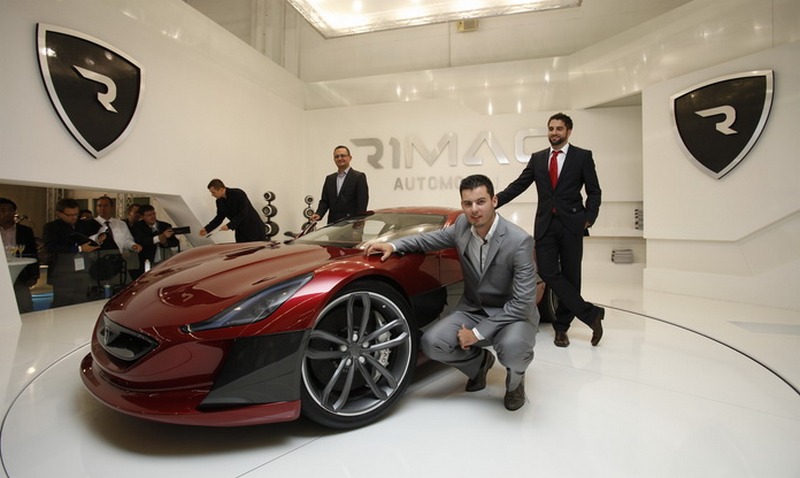
Tesla Motors Inc (NASDAQ:TSLA) could get a run for its money when Croatian firm Rimac Automobili’s new car goes into production. Rimac’s Concept_One is not the concept its name implies any more. It is set to make its worldwide debut at the Geneva Motor Show next month.​

The car boasts an impressive top speed of around 220 miles per hour. It can go from 0 to 62 miles per hour in a remarkable 2.6 seconds, outrunning the Tesla Model S. A Tesla Model S P90D equipped with Ludicrous Mode can hit 60mph in 2.8 seconds. The Concept_One’s 8,450-cell battery pack gives it 1,088 horsepower, and it has 1600 Nm of torque. Its interior is well appointed and includes a touchscreen surrounded by carbon fiber and aluminum. The four powerful permanent magnet electric motors are baked into each wheel, and the firm built an entirely new chassis and powertrain to optimize weight distribution using its All Wheel Torque Vectoring System. Rimac’s goal was to produce as much of the car as it could in house, including the batteries. The car has more than just tremendous speed as its claim to fame. It can also gracefully navigate calmer situations, with driving modes such as Control, Comfort, Drift, and Track. It’s every bit as good at cornering sideways as it is at picking up the kids at school. More than 500 sensors have been placed in the car to collect telemetry data, which you can then analyze on your smartphone or computer after doing some laps on the track.

Picture

Molycorp Files for Chapter 11, Delisted From NYSE 

June 26, 2015


http://247wallst.com/commodities-metals/2015/06/26/molycorp-files-for-chapter-11-delisted-from-nyse/

By Paul Ausick June 26, 2015 1:05 pm EDT

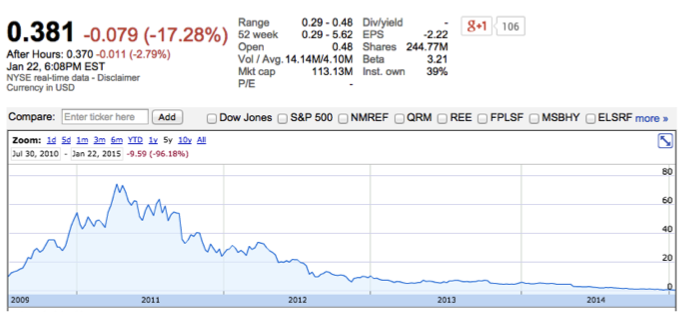
When Molycorp (MCPIQ) held its initial public offering in July of 2010, the company priced the shares at $13.25, below the IPO range of $15 to $17 that the company had hoped for. The stock rose to an all-time high of around $77 a share by April of 2011, before collapsing to just over a dime on the OTC Pink market Friday morning, following the stock’s delisting from the New York Stock Exchange.

The company’s Mountain Pass mine in California was touted as the answer to global dependence on China’s rare earth metals mining industry. In an attempt to clean up the country’s illegal rare earth mining operations (and to keep global prices high in the face of the threat from Molycorp), China imposed export restrictions on certain rare earth metals. Then the unexpected happened.

Major users of rare earth metals began to explore for substitutes for the expensive minerals — and users found them. Add to that the lifting of China’s export restrictions, and it was just a matter of time before new rare earth mining companies like Molycorp folded.

The company’s European and Asian operations are not affected by the bankruptcy filing, and all of Molycorp’s U.S. operations will continue running under debtor-in-possession financing while the company negotiates with its creditors. The financing package totals $225 million and the total debt being negotiated is $1.7 billion. Molycorp said that it had executed a restructuring support agreement with creditors holding more than 70% of the principal on its 10% senior secured notes.

China Export Tax Decision to Boost Rare Earth Demand

April 24, 2015


http://www.bloomberg.com/news/articles/2015-04-24/china-export-tax-decision-to-boost-rare-earth-demand-lynas-says

China’s decision to scrap export quotas and taxes on rare earth elements may boost stalled demand for the products, according to Lynas Corp.

Users have been drawing down on stockpiles while awaiting clarity over China’s policy on the export of the elements, Amanda Lacaze, Chief Executive Officer of Malaysia-based Lynas, said in an interview. Rare earths are used in everything from cruise missiles to iPads.

“In the short term, a lot of what has been damping demand will be released,” Lacaze said today by phone. “Some customers have been living off inventories and they’ll come back and start placing orders.”

Lynas, one of two major producers outside China, rose as much as 30 percent in Sydney after Molycorp Inc., the largest U.S. producer, jumped 9.4 percent Thursday in New York.

China, which produces about 85 percent of global supply, will remove export tariffs on rare earths from May and in January abandoned its 15-year export quotas after the World Trade Organization ruled the policyviolated trade rules.

“If China is committed to eliminating illegal processing and establishing a tax that’s simple to administer then prices will go up, and that will assist companies like Lynas and Molycorp,” said Dudley Kingsnorth, Perth-based executive director at Industrial Minerals Company of Australia Pty. “However, we are not going to see an instant response.”

Will Molycorp Be Delisted?

February 1, 2015


http://seekingalpha.com/article/2870476-will-molycorp-be-delisted

Jan. 30, 2015 6:24 PM ET  |  28 comments  |  About: Molycorp, Inc. (MCP)
Disclosure: The author is short MCP. (More…)

Summary

  • Molycorp recently received an NYSE notice that the stock could be delisted after trading below $1 for 30 consecutive days.
  • With consistent cash burn and operating losses, I do not see any near term catalysts to drive the stock back above $1 for an extended period.
  • Investors should avoid MCP as an NYSE delisting appears imminent.

……..
Is Delisting Imminent?In my opinion, a delisting of the stock appears imminent. DA Davidsonrecently downgrated MCP from Buy to Neutral due to lingering production issues at the company’s Mountain Pass facility. At bottleneck related to the facility’s Leach system has kept the company from operating at full capacity. With cash burn and operating losses not expected to abate any time soon, I do not see any near term catalysts that would drive the stock above $1 for an extended period. Therefore, I believe a delisting is imminent.

ConclusionI believe an NYSE delisting is imminent for MCP. Such an event would cause investors to lose interest in MCP and it would be disastrous for the stock. Investors should avoid MCP.

………..

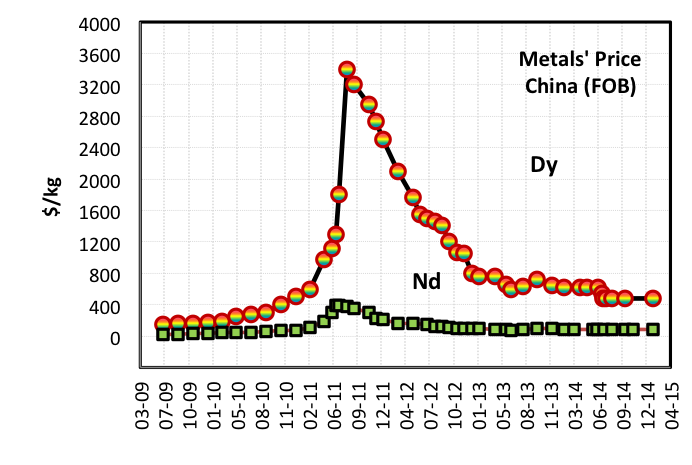
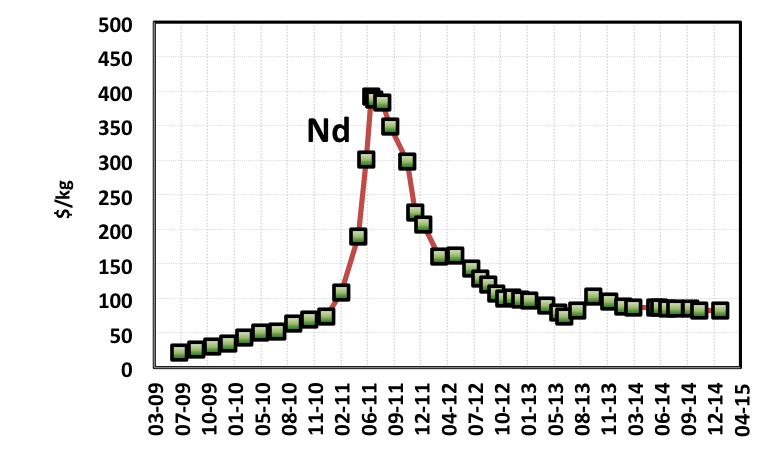
See the fellowing plots for Molycorp’s stock price and rare earth prices. (Data obtained from Google Finance and Metal-pages.)


Picture


Picture


Picture

<<Previous

Archives

  • March 2023
  • June 2021
  • November 2019
  • August 2018
  • April 2018
  • March 2018
  • December 2017
  • November 2017
  • October 2017
  • August 2017
  • November 2016
  • August 2016
  • February 2016
  • June 2015
  • April 2015
  • February 2015
  • January 2015
  • December 2014
  • November 2014
  • October 2014
  • August 2014
  • May 2014
  • April 2014
  • March 2014
  • January 2014
  • November 2013
  • October 2013
  • August 2013
  • June 2013
  • May 2013
  • Rss Feed
All copyrights are reserved by Magnet Energy Corp, excepting the photos and contents which are credited to others. 
The contents of this website may be used when it is properly cited.